WORLD HEALTH SUMMIT - BERLIN (OCT 2024)

CHAMPS

Group of people walking through floodwaters, some holding walking sticks and bottles, in a rural setting.
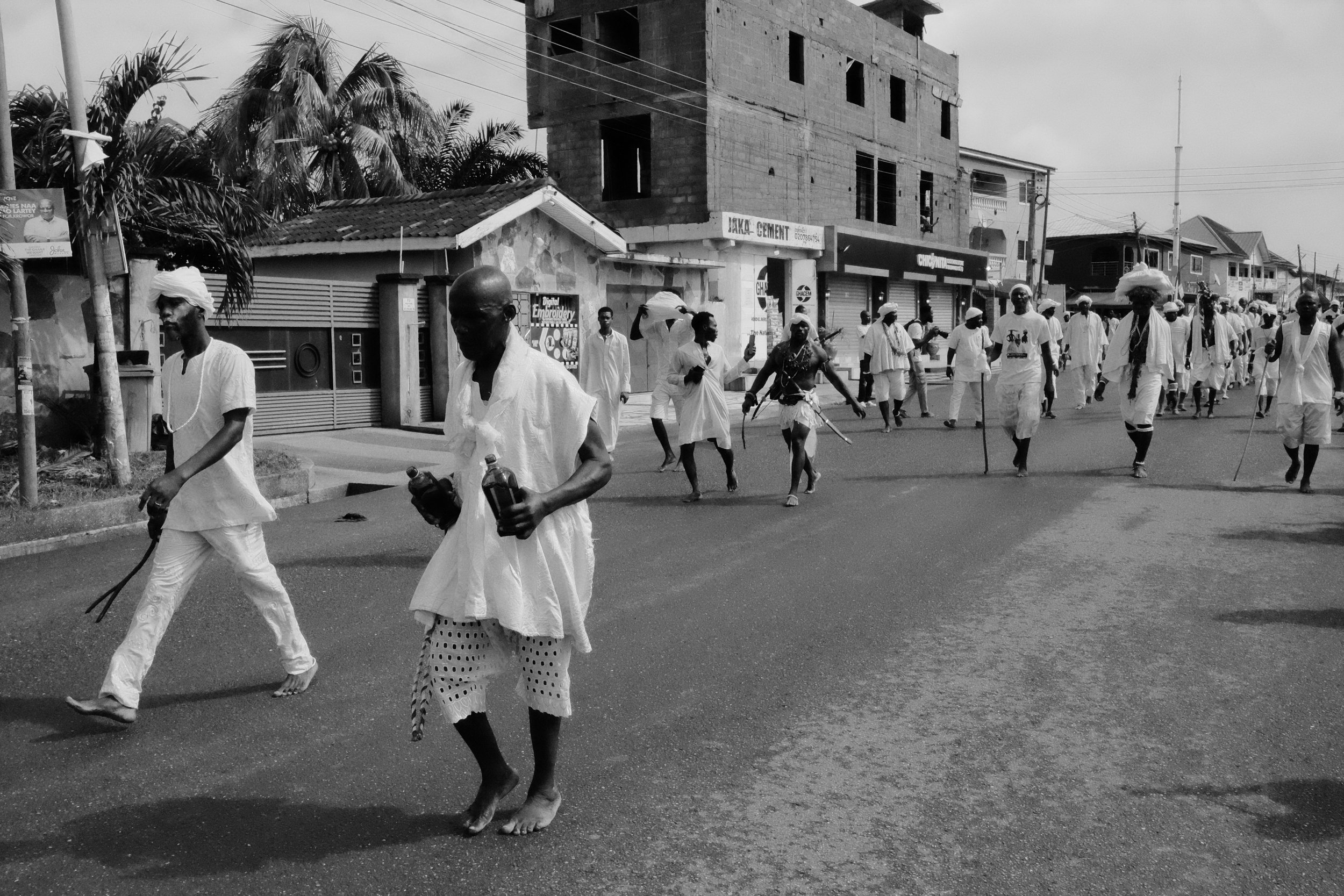
A man in white traditional clothing pouring water from a bottle during a street procession; other participants in white attire walk behind him on a city street with cars and buildings.
People dressed in traditional clothing walking on a street in what appears to be a festival or cultural event.
A woman in traditional white clothing and headwrap makes a playful expression while participating in an outdoor gathering with several people in similar attire, some wearing hats and standing under a canopy.
Men dressed in traditional white clothing and adorned with flower leis standing on a dirt ground in front of a stage or platform, with bottles and objects placed on the ground. Some men are using their phones while others are holding objects, and one man appears to be speaking or addressing a crowd.
A group of people gathered outdoors, with a man wearing traditional attire and a large headpiece made of fabric, leaves, and other materials, surrounded by onlookers and a person filming with a camera.
A group of people dressed in traditional white garments walking in a procession on a street in an urban area.
Group of men dressed in traditional white clothing participating in a cultural or religious ceremony, with some holding staffs and flowers, gathered outdoors.
Group of people dressed in white, walking through a flooded street during the daytime. Some are using walking sticks, and the scene appears to be a communal or spiritual procession.
A group of people walking through muddy terrain, some barefoot, dressed in traditional attire, with a fence and trees in the background.
Group of people outdoors, some dressed in white, engaging in a conversation or discussion. One person is pointing or gesturing with his hand.
Black and white photo of a group of people participating in a cultural parade or procession on a city street, dressed in traditional clothing and accessories, with some holding staffs and wearing head wraps.

26-05-2024

Nungua, Accra - Ghana 

Abele Womɔ kɛ Shwamɔ

Abele Womɔ kɛ Shwamɔ: The Sacred Ceremony of the Homowo Festival

Before we delve into the heart of this story, it's important to establish a few ground rules for participating in this sacred ceremony:

  1. Courtesy and Respect: Be courteous and respectful to everyone around you.

  2. Dress Code: Wear white, off-white, beige, or very light-colored clothing.

  3. Barefoot Procession: Remove your footwear if you wish to join the procession, either as an observer or to document it. Once you walk among us, you must do so barefoot.

"Abele Womɔ kɛ Shwamɔ"—the carrying and sprinkling of the sacred corn—is the seventh ceremony in the Homowo calendar, which began on April 7th.

The Ceremonial Calendar

The public rites commence with "Tekormor," which involves counting the calendar and checking the dates for Gadangme Homowo. This takes place between Gborbu wulomo and Dantu wulomo of Ga mashie, who later presents the dates to Nuumo Larkotey( Nae wulomo ) . Following this are:

  • "Dudor nu mli nu woo": Filling the sacred pot with water.

  • "Dzenten Nishwamor": Sprinkling unleavened corn at sacred sites and the corners of the earth.

Two more "Dudor nu mli nu woo" rituals follow, leading up to the sixth activity, "Mandzuramor," the purification of the town and atonement of the people’s sins. These ceremonies occur every Sunday after "Tekormor."

Preparation of the Sacred Corn

The carrier of the sacred corn is purified by the Gborbu Wulomo Shitse and must abstain from sex for a week before the occasion. The carrier, assisted by 12 disciples, travels to Antrayie-Oyibi from Nungua on Saturday evening. There, another rite is performed from evening till dawn before the journey back to Nungua with the sacred corn. A specific house at Antrayie-Oyibi prepares and purifies the corn prior to the journey.

Significance of the Abele Womor

The Abele Womor (holy corn) symbolizes the journey of our forefathers who, plagued by hunger, moved from Hebrew lands to Egypt in search of food, the origin of the Homowo festival.

The Journey

The people of Nungua carry the Adayibi (a generational corn brought down from Egypt) wrapped in white calico, journeying barefoot from Antrayie-Oyibi near Dodowa at 4 am. Fourteen main people bear the responsibility of this journey:

  • The person carrying the Adayibi (the sacred corn).

  • The person carrying the Shaami Tso (the sacred wood used for demarcation at the sacred Gborbu Temple).

A leaf is placed between their lips to enforce silence, and they are forbidden to look anywhere but forward. They are followed by 12 main disciples, representing the twelve tribes of Israel. The route traverses the legendary Pinkwai Forest, through Katamanso, Santeo, Borteymann, and crosses the motorway to Lashibi, Baatsonaa, Addogonno, Nkpor, and finally to the Nungua township.

Reception and Rituals

At Baatsonaa, the sacred entrance to the main towns, people from all walks of life, led by traditional office holders, priests, and priestesses, meet the pilgrims and join the journey to Nungua. The pilgrims proceed to Kpowuluno, the aboriginal abode of the founder of Nungua, Nuumo Borketey Larweh, where the Gborbu Wulomo Shitse receives the Adayibi and its pilgrims. He is assisted by the Nungua Mantse, Nungua Woleiatse, Nungua Dzaase Tse, and other traditional office holders. In the afternoon, the sacred corn is shelled and sprinkled at the ninety-nine divinities of Nungua, representing the seven corners of the earth, by the Gborbu Wulomo Shitse, the spiritual overlord of the Gadangme state.

This ceremony, rich in tradition and spiritual significance, is a cornerstone of the Homowo festival, encapsulating the journey, struggles, and triumphs of our ancestors.

A man smiling and wearing a black jacket with 'Tigers Gym Utrecht' logo, standing in a room with other people, some wearing athletic gear, preparing for a boxing training session.

TIGERS GYM UTRECHT

Social Media Content strategy and production MAR - 2025

Black boxing glove with 'Tigers Gym Utrecht' logo resting on a red workout mat at a boxing gym, with graffiti art on the wall and boxing punching bags in the background.
Two people hugging and smiling in a gym setting, with a third person in the background watching.
A man in a blue and black sports jacket is assisting a person with a prosthetic leg with their shoe, while another man in a brown shirt watches in the background. The setting appears to be an indoor gym or therapy center with furniture and a large plant visible.
A male boxer wearing white gloves and a black Adidas t-shirt practicing punches on a female trainer with red hair at a boxing gym. Other people can be seen in the background.
Boxing gym locker room with athletes and coaches preparing for training or a match, sporting mudguards, and athletic gear.
A boxing trainer or coach training a young boxer, who is wearing yellow boxing gloves with a blue and green leaf pattern, in an indoor gym.
Two men practicing Muay Thai in a gym with black walls and red and blue mats. The man on the right is wearing black shorts, white gloves, and leg pads, and is kicking a punch bag. The man on the left is wearing gray t-shirt, white shorts, and black gloves, and is defending against the kick.
Group of people practicing martial arts in a gym, with one woman throwing a kick at another woman, who is blocking it with her arm, while two others practice in the background.
A group of people practicing boxing in a fitness gym with colorful graffiti art on the wall.
A man practicing martial arts or boxing in a gym, wearing gloves, with a colorful graffiti background.
A black heavy punching bag hanging from a metal bracket in a martial arts gym with black walls, red and blue mats on the floor, and black pads or shields stacked against the wall. The punching bag has the logo 'Tigers Gym Utrecht' with boxing gloves illustration.
A man in a black Adidas shirt wrapping his hand with red boxing hand wraps in a gym with colorful graffiti on the wall in the background.